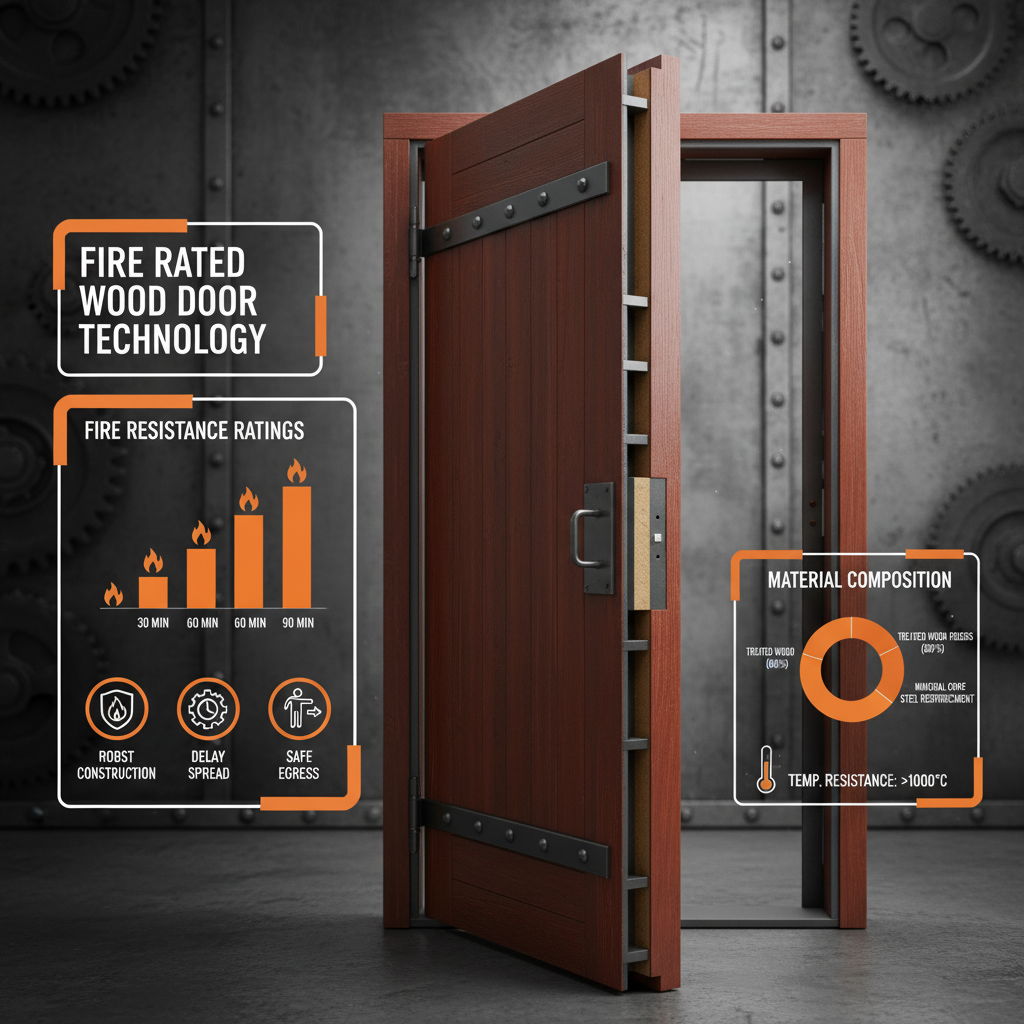
In the modern architectural landscape, the balance between aesthetic warmth and uncompromising safety is a critical challenge for developers and architects alike. A fire rated wood door serves as the primary solution to this dilemma, blending the natural elegance of timber with advanced fire-retardant engineering to prevent the spread of flames and smoke.
Beyond simple compliance, these specialized installations are essential components of a building's passive fire protection strategy. By delaying the progression of a fire, they provide invaluable minutes for occupants to evacuate safely and for emergency services to intervene, making them a non-negotiable requirement in high-traffic commercial and residential complexes.
Understanding the nuances of certification, material composition, and installation standards is key to ensuring that a fire rated wood door performs as intended during a crisis. This guide explores the technical evolution, practical applications, and future innovations of wood-based fire barriers in the global construction industry.

Global Standards for Fire Rated Wood Door Systems
The implementation of a fire rated wood door is governed by strict international standards, such as UL (Underwriters Laboratories) in North America and EN (European Norms) in Europe. These certifications ensure that every door has undergone rigorous furnace testing to verify its ability to withstand extreme heat for a specified duration, typically ranging from 20 to 90 minutes.
Global safety regulations, supported by ISO guidelines, emphasize that fire doors must be treated as complete systems. This means the fire rated wood door leaf, the frame, the intumescent seals, and the closing hardware must all work in harmony to maintain the integrity of the fire compartment.
Core Components of High-Performance Wood Fire Doors
The efficacy of a professional-grade wood fire door relies on its internal composition. Unlike standard interior doors, these units utilize a mineral core or specially treated particle board that resists combustion. This dense core prevents the fire from penetrating the door's center, effectively creating a thermal shield between two separate zones.
Intumescent strips are another critical component. These are strips of material placed around the edges of the fire rated wood door that expand when exposed to heat. This expansion seals the gaps between the door and the frame, preventing the lethal passage of smoke and hot gases, which are often more dangerous than the flames themselves.
Lastly, the hardware—including hinges, locks, and automatic closers—must be fire-certified. A fire door is only effective if it is closed; therefore, heavy-duty self-closing mechanisms ensure the door returns to its sealed position automatically, maintaining the building's safety perimeter without requiring manual intervention during an emergency.
Definition and Technical Classification of Fire Ratings
At its simplest, a fire rated wood door is a specially engineered timber door designed to limit the spread of fire and smoke for a designated period. This classification is vital for architects to determine the "fire compartmentation" of a building, ensuring that hazardous areas are isolated from exit routes.
The "rating" of a fire rated wood door typically refers to the time it can withstand fire (e.g., 30, 60, or 90 minutes). For instance, a 60-minute rating means the door assembly prevents the passage of fire and maintains structural stability for at least one hour under standardized test conditions.
These ratings are not just labels but are based on the "integrity" (the ability to stop flames) and "insulation" (the ability to stop heat transfer) of the door. This ensures that the opposite side of the fire rated wood door remains cool enough for people to touch and pass through during an evacuation.
Comparative Efficiency of Different Core Materials
Selecting the right core material for a fire rated wood door depends on the required fire rating and the environmental conditions of the installation site. Mineral cores offer the highest heat resistance but are heavier, while chemically treated timber cores provide a lighter alternative for shorter fire durations.
Modern engineering has introduced hybrid cores that combine the strength of solid wood with the fire-blocking properties of synthetic composites. This allows for a fire rated wood door that is both structurally robust and lightweight enough for standard hinges.
Material Performance Rating for Fire Rated Wood Door Cores
Real-World Applications Across Global Industries
In the hospitality industry, the fire rated wood door is the gold standard for hotel guest rooms. It provides the necessary privacy and sound insulation guests expect, while ensuring that each room acts as a temporary fire cell, preventing a fire in one room from sweeping through the entire corridor.
Healthcare facilities and hospitals utilize these doors in patient wards and medication storage areas. Because hospitals often have non-ambulatory patients, the extra time provided by a high-quality fire rated wood door is critical for the slow and careful evacuation of patients by medical staff.
Long-Term Value and Sustainability Benefits
Choosing a fire rated wood door offers a unique blend of logical safety and emotional comfort. Unlike steel fire doors, which can feel industrial and cold, wood-based solutions maintain the aesthetic dignity of a space, making them ideal for luxury offices and high-end residential projects.
From a sustainability perspective, responsibly sourced timber has a much lower carbon footprint than metal. By utilizing FSC-certified wood and non-toxic fire retardants, companies can achieve LEED or BREEAM certifications, proving that safety does not have to come at the expense of the environment.
The long-term value lies in the durability and versatility of the material. A well-maintained fire rated wood door can be refinished or repainted to match evolving interior designs without compromising its fire-resistant properties, reducing the need for complete replacements.
Future Innovations in Fire-Retardant Wood Technology
The future of the fire rated wood door is being shaped by nanotechnology. Researchers are developing "nano-coatings" that penetrate deep into the wood fibers, creating a molecular shield that prevents ignition and reduces the reliance on thick, heavy mineral cores.
Digital transformation is also playing a role through the integration of "Smart Door" sensors. Future installations will likely include IoT sensors that alert building managers in real-time if a fire rated wood door has been propped open or if the seal has degraded, ensuring 100% operational readiness.
Furthermore, the push toward "Green Construction" is driving the development of bio-based fire retardants. These new chemicals replace traditional halogenated compounds with organic alternatives, making the fire rated wood door safer for both the occupants and the workers during the manufacturing process.
Comparison of Traditional vs. Next-Gen Fire Rated Wood Door Technologies
| Technology Era |
Core Material |
Safety Mechanism |
Environmental Impact |
| Traditional |
Solid Heavy Timber |
Basic Chemical Soak |
High Carbon/Chemicals |
| Modern Standard |
Mineral Core / Particle |
Intumescent Seals |
Moderate Impact |
| Eco-Advanced |
FSC-Certified Hybrid |
Bio-based Retardants |
Low Carbon/Sustainable |
| Smart-Integrated |
Engineered Composite |
IoT Status Monitoring |
Optimized Lifecycle |
| Nano-Enhanced |
Nano-coated Wood |
Molecular Fire Shield |
Ultra-Low Toxicity |
| Future Concept |
Self-Healing Bio-Polymer |
Active Heat Response |
Carbon Negative |
FAQS
Yes, one of the biggest advantages of a fire rated wood door is its versatility. They can be veneered with various wood species (like oak, walnut, or maple), painted, or carved to fit the aesthetic of a room. However, it is crucial that any finishing material used is also fire-retardant and does not compromise the door's certified rating.
Authentic fire rated wood doors carry a permanent certification label or "fire tag" usually located on the hinge edge of the door leaf. This tag specifies the rating (e.g., 20, 45, 60, or 90 minutes) and the certifying body (such as UL or Intertek). If the tag is missing or painted over, the door may not meet local safety codes.
In terms of time-rating, yes. A 60-minute wood fire door is designed to provide the same level of protection as a 60-minute steel door. While steel has higher absolute heat resistance, engineered wood doors provide better thermal insulation (preventing the door from becoming too hot to touch) and significantly better acoustic properties for privacy.
Depending on local regulations, they should typically be inspected every 6 to 12 months. Inspectors check for gaps in the frame, the condition of the intumescent seals, and the functionality of the self-closing mechanism. A fire rated wood door that doesn't close fully is functionally equivalent to having no fire door at all.
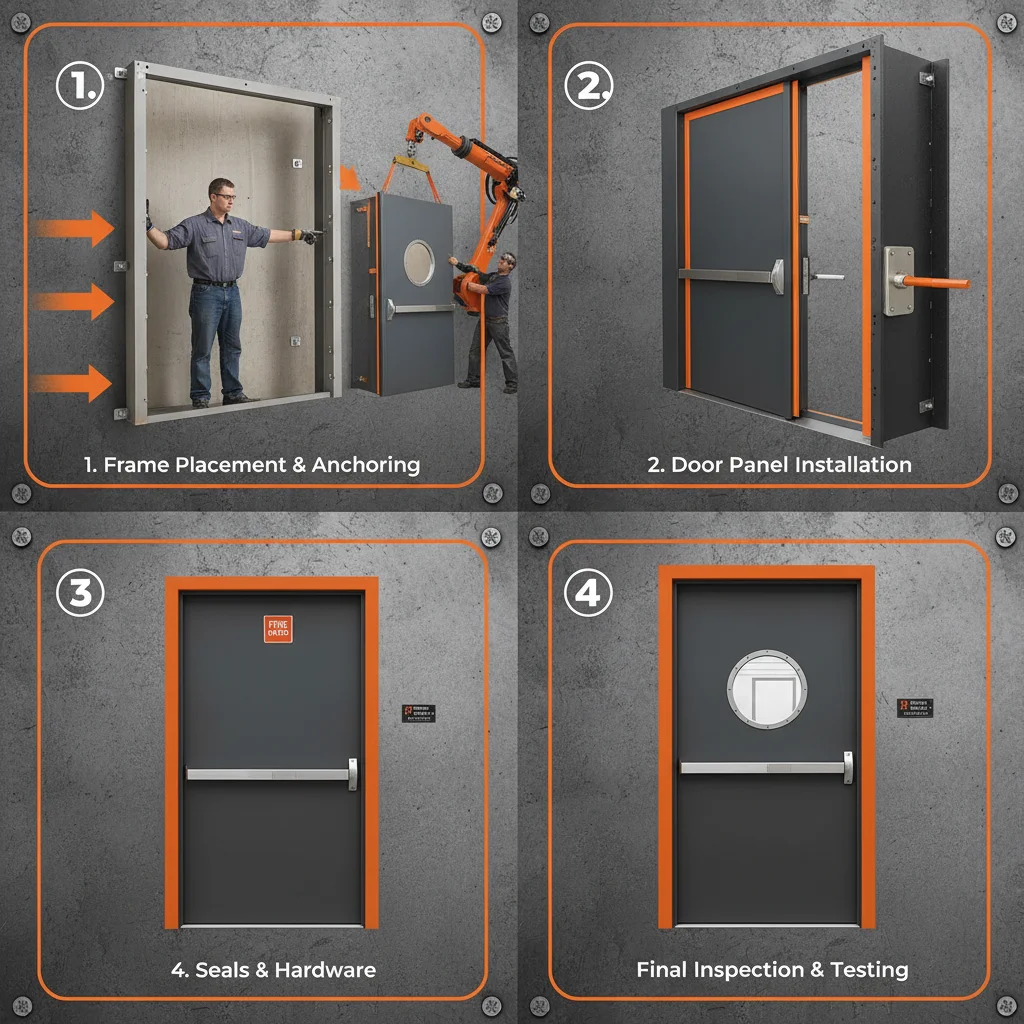
It is highly recommended to use certified professionals. The installation of a fire rated wood door involves precise tolerances; if the gap between the door and the frame is too wide, the intumescent seals may not work correctly. Professional installation ensures that the assembly remains compliant with the original fire test certification.
No, maintenance is relatively low. Most of the cost involves periodic hardware lubrication and checking the seals. Compared to the massive liability costs of a fire safety failure or the cost of replacing non-compliant doors during a building inspection, the maintenance of a quality fire rated wood door is a very cost-effective investment.
Conclusion
In summary, the fire rated wood door represents the perfect intersection of safety engineering and architectural beauty. By utilizing advanced mineral cores, intumescent technology, and strict global certification standards, these doors provide a critical layer of protection that saves lives without sacrificing the warmth and professionalism of wood interiors.
As we move toward a future of smarter, greener buildings, the evolution of these doors will continue to prioritize both human safety and ecological sustainability. Whether you are retrofitting an old facility or designing a new skyscraper, investing in high-quality fire-rated solutions is not just a regulatory requirement—it is a commitment to the safety and dignity of every person who enters the building. Visit our website for more professional solutions: www.cnbuildhive.com