Add: Room 402, Building 1, Hongyuan Innovation Building, Wujiaochang Subdistrict, Yangpu District, Shanghai
CONTACT US
+86 18595994837
CONTACT US
+86 18595994837

Procurement decisions for commercial construction and architectural fit-outs require rigorous evaluation of material performance under specific environmental stresses. Procurement managers and commercial contractors must assess how door assemblies withstand moisture exposure and mechanical wear.
The material composition of wood fiber and thermoplastic composite provides structural balance for both dry and wet application environments, ensuring dimensional stability across fluctuating site conditions. Technical validation of these physical properties remains essential for specifying interior doors in demanding hospitality, residential, and office projects.
To establish objective procurement criteria, buyers analyze composite behavior against traditional timber alternatives across varying traffic volumes and humidity levels. Documentation and test reports are available from the supplier to verify core performance parameters.
Cellular matrices infused with polymer resins yield door assemblies capable of maintaining geometric integrity across fluctuating ambient humidity. Interlocking molecular bonds distribute mechanical stress uniformly throughout the profile section, reducing localized failure points in both dry and wet operating conditions.
Closing the polymer matrix blocks capillary moisture penetration effectively. Variations in atmospheric moisture do not induce the severe swelling or contraction typical of natural timber products.
Luxury villas and high-end hospitality projects require interior assemblies that maintain precise alignment over extended operational lifecycles. Traditional timber products frequently warp when subjected to seasonal temperature swings, but thermoplastic composites counteract this tendency through balanced internal tension.
Project specifiers rely on verified density and deflection resistance parameters to ensure long-term frame and panel alignment across diverse site climates. Technical specification documents and sample material profiles are available from the factory supplier team to verify suitability for upcoming commercial builds.

High-moisture environments demand architectural components capable of maintaining structural integrity under persistent water exposure. Wood fiber and thermoplastic composite formulations prevent internal saturation through dense internal bonding.
Utility spaces undergo frequent cleaning cycles involving moisture and aggressive chemical agents. The non-porous surface behavior shields the core material from moisture-induced breakdown.
Heavy daily use in hospitality guest rooms requires door assemblies that resist mechanical impacts and high humidity without swelling or surface delamination. Facility maintenance teams evaluate material longevity based on moisture resistance in heavily utilized commercial settings.
Documentation regarding technical specification parameters is available from the supplier to verify dimensional stability across fluctuating relative humidity levels.
High-end residential developments frequently encounter operational failures when traditional timber doors warp under fluctuating indoor climates. Luxury villas and premium apartments incorporate large joinery openings that exaggerate the seasonal expansion and contraction forces inherent in solid wood products. Thermoplastic composite door assemblies counteract these mechanical distortions through balanced internal tension provided by the wood fiber and polymer blend.
Architectural finishing requirements in luxury interiors demand tight shadow gaps and consistent panel alignment across custom joinery layouts. Traditional timber products absorb ambient humidity variations, leading to jammed frames and uneven reveal lines. Composite door leaves maintain geometric integrity across seasonal humidity swings without requiring periodic planing or hardware realignment.
Interior designers specifying luxury apartment projects utilize composite surfaces to achieve seamless integration with custom wall paneling and architectural hardware. The uniform density distribution across the door profile prevents surface telegraphing and preserves decorative finishes under heavy daily usage. Procurement teams evaluating high-durability apartment fit-outs find that material stability directly reduces call-back maintenance expenses caused by seasonal wood movement.

Project specification matching depends on ambient moisture levels and mechanical impact requirements across destination environments. Architectural specifiers evaluate material resilience characteristics against site-specific humidity profiles to select appropriate door configurations. Technical documentation and material specification files outline the operational boundaries for each project phase.
| Application Environment | Suitability for Humid Environments | Price Tier | Required Documentation |
|---|---|---|---|
| Residential interiors | Suitable | Standard | Technical specification file |
| Commercial interiors | Suitable | Standard | Technical specification file |
| Bathrooms | High suitability | Standard to Premium | Technical specification file |
| High-traffic office corridors | Suitable | Standard to Premium | Technical specification file |
| Kitchens | High suitability | Standard to Premium | Technical specification file |
| Humid coastal climates | High suitability | Premium | Technical specification file |
| Luxury villas and apartments | High suitability | Premium | Technical specification file |
| Hospitality projects | High suitability | Standard to Premium | Technical specification file |
| Wet areas | High suitability | Standard to Premium | Technical specification file |
| Laundry rooms | High suitability | Standard to Premium | Technical specification file |
Cross-climate deployments require specifiers to assess thermal expansion and moisture absorption rates. The closed polymer matrix blocks capillary moisture penetration, allowing doors to maintain dimensional stability from arid inland regions to humid coastal climates. Specifiers map these resilience traits directly against regional weather data to determine panel compatibility.

Deployments in high-traffic office corridors or hospitality projects demand high mechanical impact resistance alongside moisture protection. Facility planners utilize qualitative performance indicators to align door thickness and frame structure with projected wear volumes. Procurement timelines and minimum order quantities remain variable, depending on project scale, shipping destination ports, and custom finishing requirements.
Procurement managers evaluate architectural door materials based on moisture resistance, impact durability, and expected service lifespan across various operational environments. Initial acquisition budgets must be weighed against long-term maintenance frequency when selecting assemblies for high-moisture and high-traffic projects.
Material-level moisture defense directly reduces structural degradation, yielding lower replacement cycles compared to conventional timber alternatives. Facility operators avoid recurring repair expenses because the composite formulation prevents swelling and rotting in moisture-prone zones.

Specifiers embed technical criteria into tender documents by aligning environmental exposure levels with specific material resilience thresholds.
| Application Environment | Resilience Characteristic | Documentation Status |
|---|---|---|
| Residential interiors | Standard moisture defense | Technical specifications available upon request |
| Commercial interiors | Impact resistance | Technical specifications available upon request |
| High-traffic office corridors | Mechanical wear tolerance | Technical specifications available upon request |
| Humid coastal climates | Salt-air and moisture barrier | Technical specifications available upon request |
| Luxury villas and apartments | Warp prevention | Technical specifications available upon request |
Project budgets dictate final material selections, and specific cost outcomes remain dependent on order volumes, custom dimensions, and destination port logistics.
The enclosed polymer matrix blocks capillary moisture penetration effectively across wet zones. When evaluating wet area exposure in bathrooms or utility spaces, buyers focus on whether this structural defense prevents warping without needing secondary coatings. Final performance levels vary depending on specific site humidity ranges and exposure durations.
Commercial interior spaces with high mechanical wear require door components capable of absorbing frequent impact. Architectural specifiers examine the solid core construction to confirm mechanical resilience under high-traffic conditions. Procurement decisions rely on matching the structural grade directly to projected daily operational frequencies.
Hospitality developments and luxury apartments demand precise dimensional alignment over long operational lifecycles. Project teams evaluate cross-sectional stability to prevent seasonal sticking or edge degradation. Sourcing managers align door profile selections with architectural clearance tolerances defined in the fit-out drawings.
Unlike natural timber which absorbs ambient moisture and swells, thermoplastic composites maintain geometric integrity across fluctuating relative humidity levels. Procurement leads assess long-term lifecycle savings by factoring in reduced maintenance and replacement cycles in coastal or humid regions. Cost comparisons account for regional shipping variables and total order volumes.
Project specifiers request technical specification sheets and material profiles directly from the factory team prior to final contract signing. These documents outline physical characteristics and application boundaries for residential and commercial spaces. Final document delivery schedules depend on order scale and target port destination requirements.
Procurement teams initiate final validation phases by reviewing engineering dossiers that detail material resilience against moisture ingress and mechanical wear. Architectural specifiers evaluate whether submitted test parameters match the physical demands of upcoming commercial builds across diverse environmental zones.
Factory profiles containing precise dimensions and composite densities determine final product alignment prior to bulk dispatch. Shipment schedules depend entirely on port availability and regional distribution logistics rather than standard lead-time assumptions.
Reviewing material data sheets allows purchasing managers to verify that thermoplastic compositions withstand continuous exposure in heavy-use zones without structural degradation. Final specification sign-offs rely directly on these verified profiles to confirm suitability for specialized interior projects.

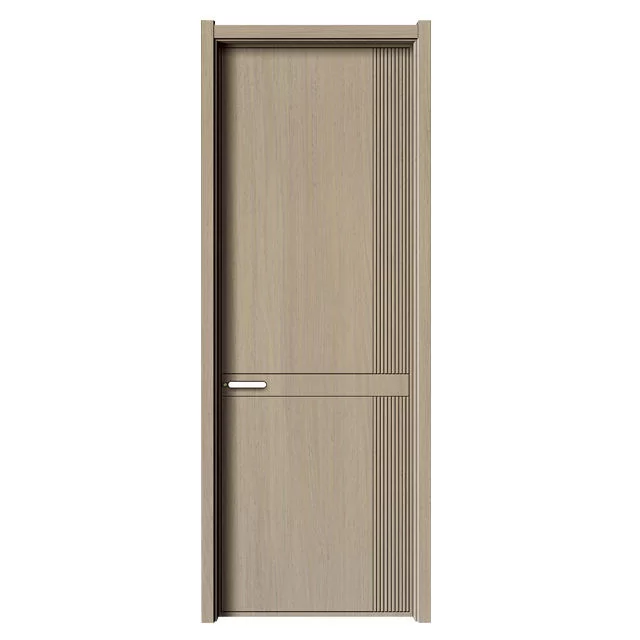
Engineered for mission-critical durability in large-scale architectural developments, our commercial-grade WPC Door assemblies deliver unparalleled resistance to moisture and structural degradation. Utilizing an advanced Wood Plastic Composite door skin and high-density solid core, these heavy-duty interior units provide 100% waterproof, anti-termite, and anti-warping performance—essential for high-traffic public restrooms, commercial kitchens, and demanding hospitality environments. Manufactured directly in our specialized B2B facilities, we offer scalable custom dimensions, premium PVC laminated finishes, and turnkey hardware integration to ensure rapid, fail-safe installation for global general contractors.

Premium steel entry security door engineered for residential protection. Features a reinforced steel frame, multi-point locking system, and durable powder-coated finish available in multiple wood-grain and solid colors. Custom sizes, hardware, and glass options supported. Factory-direct pricing with CE/ISO certified quality — ideal for homes, apartments, and villas.

Heavy-Duty Steel Fire Rated Doors | 30 to 120-Min Fire Resistance
Engineered for heavy-duty industrial complexes and massive commercial infrastructures, this steel fire rated door holds verified UL and CE certifications for uncompromising global project compliance. Delivering extreme thermal containment with certified 45 minute fire rated door, 90 minutes hour fire rated door, and 120 minutes steel fire rated doors ratings. Factory-fitted with industrial-grade panic bars, hydraulic door closers, and heavy-duty stainless hinges. Available in single leaf fire rated door and double leaf configurations with fire-rated tempered glass. Factory-direct wholesale supply optimized for high-risk industrial zones, power plants, and large-scale manufacturing facilities.
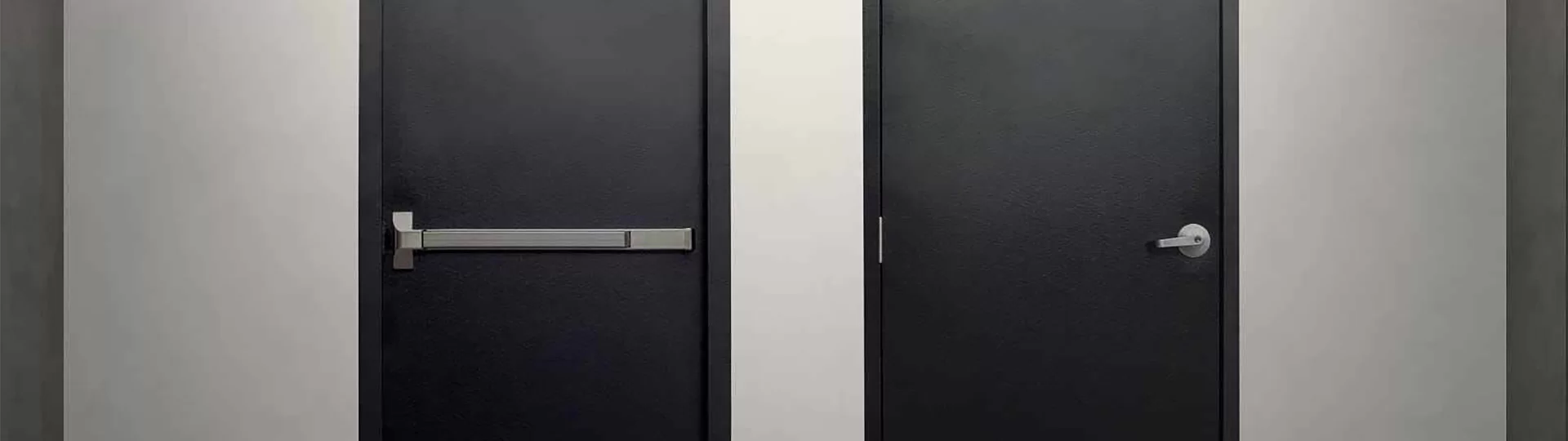
Professional Fireproof Door