CONTACT US
+86 18595994837
Ensuring life safety in modern architecture requires more than just basic barriers; it demands high-performance engineering. The stainless steel fire door represents the pinnacle of this intersection between security and aesthetics, providing a critical line of defense against the spread of smoke and flames. By utilizing corrosion-resistant alloys and advanced thermal insulation, these doors ensure that emergency egress routes remain viable during the most critical moments of a building evacuation.
Globally, the demand for high-durability fire protection has surged as urban density increases and building codes become more stringent. From sterile hospital environments to heavy-duty industrial plants, the versatility of a stainless steel fire door allows architects to maintain a clean, professional look without compromising on the rigorous safety standards set by international fire protection agencies.
Understanding the technical nuances of these systems—from the grade of steel used to the integrity of the intumescent seals—is essential for developers and facility managers. This guide explores the comprehensive utility of stainless steel fire protection, detailing how these specialized components protect human life, preserve valuable assets, and contribute to the overall sustainability of the built environment.
The global construction landscape is currently facing a dual challenge: the need for rapid urbanization and the imperative of stringent safety regulations. According to ISO and various international building codes, the failure of passive fire protection systems is a leading cause of catastrophic loss during industrial fires. This has pushed the industry toward materials that offer both structural integrity and high thermal resistance, making the stainless steel fire door a preferred choice for high-risk zones.
Beyond mere compliance, the integration of stainless steel in fire-rated assemblies addresses the problem of environmental degradation. In coastal regions or chemical processing plants, standard carbon steel doors succumb to rust, which compromises their fire-stopping capabilities. By switching to stainless steel, industries ensure that their safety barriers remain functional for decades, reducing the risk of systemic failure during an emergency.
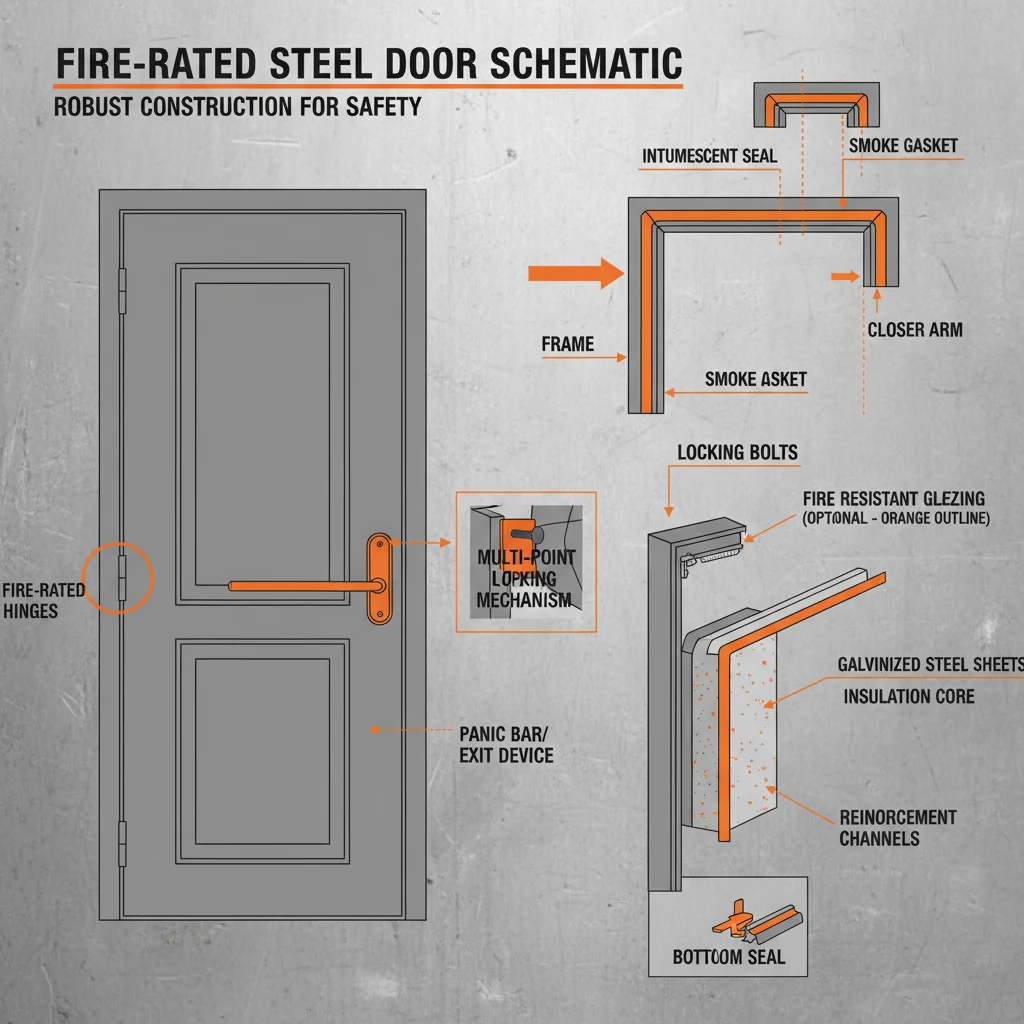
At its most basic level, a stainless steel fire door is a specialized passive fire protection assembly designed to prevent the spread of fire and smoke between different compartments of a building. Unlike standard doors, these are engineered with a core of non-combustible insulating material, encased in high-grade stainless steel sheets (typically 304 or 316 grade) that can withstand extreme temperatures without warping or melting.
The connection to modern industry is profound; these doors are not just "hardware" but are critical components of a building's life-safety strategy. In humanitarian contexts, such as the construction of modern hospitals or emergency shelters in disaster-prone areas, these doors provide the necessary security to protect vulnerable populations and critical medical equipment from accidental fire outbreaks.
Moreover, the "stainless" aspect is not merely for aesthetics. The chromium-nickel alloy provides a hygienic, non-porous surface that is easy to sanitize, which is why these doors are indispensable in pharmaceutical labs and food processing plants where fire safety and sanitary standards must coexist seamlessly.
The effectiveness of a stainless steel fire door depends heavily on its material composition. The exterior skin must be of a specific gauge to resist physical impact while maintaining the structural stability required to hold back a fire for 60, 90, or 120 minutes.
A critical component is the intumescent seal. This material expands when exposed to heat, sealing the gaps between the door leaf and the frame. Without this high-performance seal, a stainless steel fire door would allow toxic smoke to leak through, which is often more lethal than the fire itself.
Furthermore, the hardware—including heavy-duty hinges and panic bars—must be fire-rated. The synergy between the stainless steel shell, the insulating core, and the specialized hardware ensures that the door remains operable for egress while remaining an impenetrable wall for flames.
When evaluating fire protection systems, the industry relies on quantitative data to ensure reliability. The performance of a stainless steel fire door is measured not only by its fire rating but also by its resistance to corrosion and frequency of use (cycling).
Comparing different configurations allows facility managers to choose the right balance between cost and extreme durability, ensuring the chosen solution matches the specific risk profile of the installation environment.
In real-world applications, the stainless steel fire door is indispensable in high-traffic industrial zones. For instance, in petrochemical refineries in the Middle East, these doors protect critical control rooms from flash fires while resisting the corrosive effects of saline air and chemical vapors.
Similarly, in the healthcare sector across Europe and North America, stainless steel fire doors are the standard for operating theaters and sterilization rooms. Here, they serve a dual purpose: preventing the spread of fire during an emergency and maintaining a sterile environment that prevents the growth of bacteria.
The initial investment in a stainless steel fire door is higher than that of painted steel or timber alternatives, but the long-term value is unmatched. Because stainless steel does not require repainting or chemical coatings to prevent rust, the maintenance costs over a 20-year lifecycle are significantly lower.
From a sustainability perspective, stainless steel is 100% recyclable. This aligns with the global shift toward "Green Building" certifications like LEED or BREEAM, where the longevity and recyclability of materials are heavily weighted.
Beyond the logic of cost, there is an emotional value: trust. Knowing that a facility is equipped with the highest grade of fire protection provides peace of mind to employees and stakeholders, reinforcing a culture of safety and institutional responsibility.
The future of the stainless steel fire door lies in the integration of "Smart Building" technology. We are seeing the emergence of doors equipped with IoT sensors that can detect heat or smoke and automatically trigger the closing mechanism, ensuring that fire compartments are sealed even if human error leads to a door being left open.
Material science is also evolving, with the development of nano-coatings that increase the heat-reflective properties of the steel, potentially extending the fire-resistance rating without increasing the weight of the door.
As global policies move toward carbon neutrality, the focus is shifting toward low-carbon stainless steel production. This means the safety doors of tomorrow will not only protect lives during a fire but will also be produced with a minimal environmental footprint.
| Material Grade | Fire Rating (Hours) | Corrosion Resistance | Typical Application |
|---|---|---|---|
| SS 304 Standard | 2-3 Hours | High | Commercial Offices |
| SS 316 Marine Grade | 3-4 Hours | Extreme | Offshore Platforms |
| Galvanized Steel | 1-2 Hours | Medium | Warehouse Interiors |
| Composite Core SS | 4+ Hours | High | Nuclear Power Plants |
| SS 430 Ferritic | 1-2 Hours | Low-Medium | General Industrial |
| Custom Alloy SS | Variable | Very High | Chemical Laboratories |
The primary difference lies in corrosion resistance and hygiene. While both can provide the same fire rating, a stainless steel fire door is immune to rust in humid or corrosive environments and is much easier to sterilize, making it essential for hospitals and food plants where a standard painted steel door would peel and degrade.
You should look for certification marks such as UL (Underwriters Laboratories), NFPA, or EN standards. A certified stainless steel fire door will come with a label indicating its fire-resistance duration (e.g., 90 mins) and the specific tests it has passed. Always verify the certification with your local fire marshal.
Yes, they are typically custom-fabricated to fit the specific architectural openings of a building. Whether you need double-leaf doors for wide corridors or single-leaf doors for utility rooms, they can be tailored while maintaining their fire-rated integrity.
Depending on the usage and local regulations, annual inspections are recommended. Inspectors check the integrity of the intumescent seals, the functionality of the self-closing mechanism, and ensure the door closes fully and tightly against the frame to maintain its fire-stopping capacity.
The upfront cost of materials and installation is higher than carbon steel. However, because they require virtually no painting and have a much longer service life in harsh conditions, the total cost of ownership (TCO) is often lower over the lifetime of the building.
It is the best choice when fire safety must be combined with corrosion resistance and hygiene. For a standard dry indoor environment, galvanized steel may suffice, but for any industrial, medical, or coastal application, stainless steel is the superior choice for reliability and longevity.
In summary, the stainless steel fire door is more than just a physical barrier; it is a sophisticated engineering solution that balances life safety, durability, and aesthetic professionalism. By integrating high-grade alloys with thermal insulation and smart sealing technology, these doors provide a reliable defense against fire and smoke while resisting the wear and tear of the most demanding industrial environments.
Looking forward, the evolution of fire protection will likely see a deeper integration of automated systems and sustainable manufacturing. For developers and facility managers, investing in high-quality stainless steel solutions today is a commitment to long-term safety and operational efficiency. To ensure your facility is protected by the highest industry standards, visit our website: www.cnbuildhive.com

If you are interested in our products, you can choose to leave your information here, and we will be in touch with you shortly.